A guide
How a bathroom job actually runs.
Eight stages, in the order they happen, with what is going on at each one and what — if anything — is needed from you. Most of what goes wrong with a bathroom goes wrong in the stages nobody ever sees, so those get the most space here.
STAGE 01
The visit, and the price
Paul comes to the house. That is not a formality — it is where the price comes from. Where the soil pipe runs decides whether the WC can move. What the floor will take decides whether underfloor heating fits without the door catching. What the incoming pressure actually is decides whether the shower you have your eye on will perform. None of that is visible in a photograph.
You talk through what you want, he measures, and he tells you honestly what the room will and will not take. Then you get a price for the whole job. The visit is free and there is no obligation afterwards — if you decide against it, or against him, that is the end of it.
Your bit A rough idea of the layout you want, and whether you are buying the suite or you would like Mr Useful to supply it. Photos of bathrooms you like help far more than adjectives do.
STAGE 02
Design and space planning
Whether it is a full refurbishment or a room that has never been a bathroom before, this is where the layout gets settled: what physically fits, how the room reads when you open the door, how much elbow room there actually is at the basin, and where each item centres. Paul puts positioning and symmetry near the top of his own list, and this is the stage where it gets decided.
A bathroom has to be practical, and ease of use comes first. But it is also a room most people use twice a day and — for a lot of households — the only place anyone gets five minutes on their own. It is worth getting the look and feel of it right, not just the plumbing.
Your bit Say what you actually want, including the things you think are silly. Wanting the towel rail on a particular wall is a perfectly good reason to put it there.
STAGE 03
Supply — or your own purchases
Mr Useful has access to the major brands and can supply the suite, fittings and radiators as part of the job. Plenty of customers prefer to buy their own, and that is completely fine. If you are buying, have the conversation before you order: sizes, finishes, quality and the extra parts a design needs are the things that go wrong from a showroom photograph.
Order with enough lead time and get everything delivered before day one. A bathroom stalled waiting on a back-ordered screen is the most avoidable delay there is. Check the tiles are all the same batch while the delivery driver is still outside.
Your bit Suite, taps, shower, screen and tiles on site and checked, whoever bought them. Parking sorted if the street is tight.
STAGE 04
Protection and strip-out
Before anything comes out, the carpets on the route in get covered with a clear protector — much like cling film. It is a small thing that says a lot about how the rest of the week is going to go. Paul is working in your home, and the aim is to keep the upheaval to what is genuinely unavoidable.
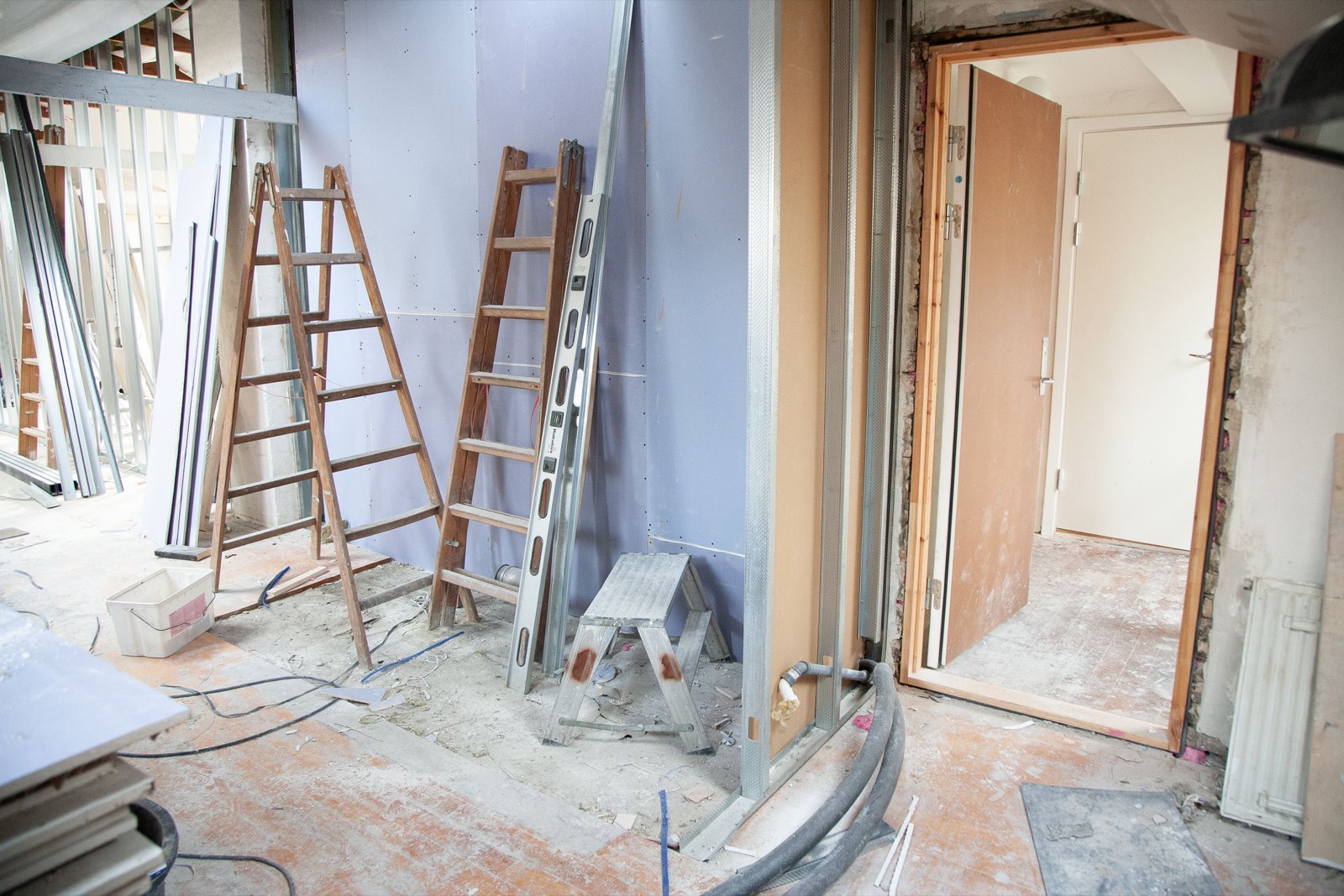
Then the old suite comes out, the old tiles come off, and the waste is taken away rather than stacked in the front garden. This is the loud, dusty day, and it is the day the room tells you the truth about what is behind it. Anything unexpected — rotten boards under a leaking tray, a previous repair done badly — gets shown to you and discussed before it is covered back up.
Your bit Keep doors shut and anything precious out of the hallway. Dust travels further than anyone expects.
STAGE 05
Pipework, waste and first fix
Feeds and wastes are re-routed so the towel rail, WC, basin and shower sit where the new layout wants them. Falls on waste runs get set properly, because a shower that drains slowly is almost always a fall that was eyeballed rather than measured. Water supply and pressure get checked against what is actually going in.
Everything that is about to disappear behind a board is tested while it can still be reached. Work that has to be done and certificated by a registered trade — gas, and notifiable electrical work — is brought in at this point rather than bodged around.
Your bit The water will be off for parts of a day or two. Paul will tell you which, the day before.
STAGE 06
Boarding, levelling and waterproofing
Walls get boarded and made flat. This is what decides whether large-format tiles are going to work, because a big tile cannot follow a bowed wall — it bridges the hollow and then every joint shows a lip. Floors get levelled for the same reason, and for the heating if any is going in.
Wet areas are waterproofed before a single tile is fixed, so that if water ever gets past a grout line it meets a barrier rather than a plasterboard sandwich. It is the unglamorous half of the job and the half that decides how the room looks in five years.
Your bit Nothing at all. This is the stage you will never see and will be glad was done properly.
STAGE 07
Setting out and tiling
Before any adhesive is mixed, the room is set out dry. Centre lines found, cuts balanced, and the awkward decisions made and agreed with you: which wall the pattern centres on, whether courses run through across a return, where the borders and niches land. Ten minutes of thinking here is the difference between a room that looks fitted and one that looks designed.
Tiles are then fixed, working out of several boxes at once so any shade variation spreads across the wall instead of showing up as a band. Adhesive is left to cure properly before grouting. Internal corners and the joint where tile meets bath or tray are siliconed rather than grouted, because those joints move and grout cracks when it is asked to.
Your bit Be around for five minutes at the set-out if you can. It is the one stage where your opinion changes the outcome.
STAGE 08
Second fix, sealing and hand-over
Suite, taps, shower, screen, towel rail and lighting go in. Everything is run and checked for leaks, the extraction is tested, the waterproofing and sealing are finished off, the floor is cleaned down, and the waste leaves with the van.
Then Paul walks you round it: what has been siliconed and why, how long to leave everything before the first proper shower, and what to use on the tiles and what to keep well away from them. He handles any aftercare himself, so if something does not look right in six months you ring him, not an office.
Your bit Give the silicone the time it asks for before the first soak. It is the difference between a joint that lasts years and one that fails within months.
Short version
The four stages, boiled down.
- 01
A visit and a proper look
Paul comes to you. You talk through what you want, he measures, and he checks the things that decide what is actually possible — where the soil pipe runs, what the floor will take, whether there is pressure for the shower you have in mind. Free, and with no obligation.
- 02
Design and space planning
Whether it is a full refurbishment or a room that was never a bathroom before, Paul plans the layout with you: what fits, what it will feel like to use, and where each item should centre. Small intimate rooms and large luxurious ones get the same attention.
- 03
Supply, or bring your own
He can supply the suite, fittings and radiators from the major brands, or fit what you have already bought. If you are buying yourself, talk to him first — sizes, finishes, quality and the extra bits people forget are exactly what a second opinion is for.
- 04
Installation and hand-over
Strip-out, pipework, waste, tiling, heating, lighting, ventilation, then waterproofing and sealing. Paul is your contact the whole way through, and he handles any aftercare himself once the room is finished.
Want that walked through for your room?
Every bathroom has one stage that turns out to be the awkward one — the soil pipe, the floor build-up, the wall that is forty millimetres out. Ring Paul and he will come and tell you which one yours is.
Paul is usually on the tools, so leave a message or a text and he rings back himself — you never get passed to a call centre.